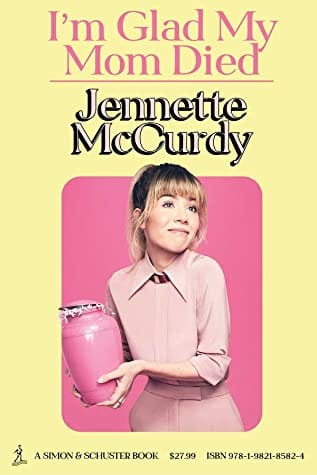
Chapter 1: I'm Glad My Mom Died
THE PRESENT IN FRONT OF me is wrapped in Christmas paper even though it’s the end of June.

THE PRESENT IN FRONT OF me is wrapped in Christmas paper even though it’s the end of June. We have so much paper left over from the holidays because Grandpa got the dozen-roll set from Sam’s Club even though Mom told him a million times that it wasn’t even that good of a deal.
I peel—don’t rip—off the paper, because I know Mom likes to save a wrapping paper scrap from every present, and if I rip instead of peel, the paper won’t be as intact as she’d like it to be. Dustin says Mom’s a hoarder, but Mom says she just likes to preserve the memories of things. So I peel.
I look up at everyone watching. Grandma’s there, with her poofy perm and her button nose and her intensity, the same intensity that always comes out when she’s watching someone open a present. She’s so invested in where gifts come from, the price of them, whether they were on sale or not. She must know these things.
Grandpa’s watching too, and snapping pictures while he does. I hate having my picture taken, but Grandpa loves taking them. And there’s no stopping a grandpa who loves something. Like how Mom tells him to stop eating his heaping bowl of Tillamook Vanilla Bean Ice Cream every night before bed because it won’t do any good for his already failing heart, but he won’t. He won’t stop eating his Tillamook and he won’t stop snapping his pictures. I’d almost be mad if I didn’t love him so much.
Dad’s there, half-asleep like always. Mom keeps nudging him and whispering to him that she’s really not convinced his thyroid is normal, then Dad says “my thyroid’s fine” in an irritated way and goes back to being half-asleep five seconds later. This is their usual dynamic. Either this or an all-out scream-fight. I prefer this.
Marcus, Dustin, and Scottie are there too. I love all of them for different reasons. Marcus is so responsible, so reliable. I guess this makes sense since he’s basically an adult—he’s fifteen—but even so, he seems to have a sturdiness to him that I haven’t seen in many other adults around me.
I love Dustin even though he seems a bit annoyed by me most of the time. I love that he’s good at drawing and history and geography, three things I’m terrible at. I try to compliment him a lot on the things he’s good at, but he calls me a brownnoser. I’m not sure what that is exactly, but I can tell it’s an insult by the way he says it. Even so, I’m pretty sure he secretly appreciates the compliments.
I love Scottie because he’s nostalgic. I learned that word in the Vocabulary Cartoons book Mom reads to us every day, because she homeschools us, and now I try to use it at least once a day so I don’t forget it. It really does apply to Scottie. “A sentimentality for the past.” That’s definitely what he has, even though he’s only nine so doesn’t have much of a past. Scottie cries at the end of Christmas and the end of birthdays and the end of Halloween and sometimes at the end of a regular day. He cries because he’s sad that it’s over, and even though it barely is over, he’s already yearning for it. “Yearning” is another word I learned in Vocabulary Cartoons.
Mom’s watching too. Oh, Mom. She’s so beautiful. She doesn’t think she is, which is probably why she spends an hour doing her hair and makeup every day, even if she’s just going to the grocery store. It doesn’t make sense to me. I swear she looks better without that stuff. More natural. You can see her skin. Her eyes. Her. Instead she covers it all up. She spreads liquid tan stuff on her face and scrapes pencils along her tear ducts and smears lots of creams on her cheeks and dusts lots of powders on top. She does her hair up all big. She wears shoes with heels so she can be five foot two, because she says four foot eleven—her actual height—just doesn’t cut it. It’s so much that she doesn’t need, that I wish she wouldn’t use, but I can see her underneath it. And it’s who she is underneath it that is beautiful.
Mom’s watching me and I’m watching her and that’s how it always is. We’re always connected. Intertwined. One. She smiles at me in a pick-up-the-pace kind of way, so I do. I pick up the pace and finish peeling the paper off my gift.
I’m immediately disappointed, if not horrified, when I see what I’ve received as my present for my sixth birthday. Sure, I like Rugrats, but this two-piece outfit—a T-shirt and shorts—features Angelica (my least favorite character) surrounded by daisies (I hate flowers on clothes). And there are ruffles around the sleeves and leg holes. If there is one thing I could pinpoint as being directly in opposition to my soul, it’s ruffles.
“I love it!” I shout excitedly. “It’s my favorite gift ever!”
I throw on my best fake smile. Mom doesn’t notice the smile is fake. She thinks I genuinely love the gift. She tells me to put the outfit on for my party while she already starts taking off my pajamas. As she’s removing my clothes, it feels more like a rip than a peel.
It’s two hours later. I’m standing in my Angelica uniform at Eastgate Park surrounded by my friends, or rather the only other people in my life who are my age. They’re all from my primary class at church. Carly Reitzel’s there, with her zigzag headband. Madison Thomer’s there, with her speech impediment that I wish I had because it’s so freaking cool. And Trent Paige is there, talking about pink, which he does excessively and exclusively, much to the dismay of the adults around him. (At first I didn’t realize why the adults cared so much about Trent’s pink obsession, but then I put two and two together. They think he’s gay. And we’re Mormon. And for some reason, you can’t be gay and be Mormon at the same time.)
The cake and ice cream are rolled out and I’m thrilled. I’ve been waiting for this moment for two whole weeks, since I first decided what I was going to wish for. The birthday wish is the most power I have in my life right now. It’s my best chance at control. I don’t take this opportunity for granted. I want to make it count.
Everyone sings “Happy Birthday” off-key, and Madison and Trent and Carly throw in cha-cha-chas after every line—it’s so annoying to me. I can tell they all think it’s so cool, how they’re cha-cha-cha’ing, but I think it takes away from the purity of the birthday song. Why can’t they just let a good thing be?
I lock eyes with Mom so she’ll know I care about her, that she’s my priority. She’s not cha-cha-cha’ing. I respect that about her. She gives me one of her big nose-wrinkling smiles that makes me feel like everything’s gonna be okay. I smile back at her, trying to take in this moment as fully as I possibly can. I feel my eyes starting to water.
Mom was first diagnosed with stage four breast cancer when I was two years old. I hardly remember it, but there are a few flashes.
There’s the flash of Mom knitting me a big green-and-white yarn blanket, saying it was something I could keep with me while she was in the hospital. I hated it, or I hated the way she was giving it to me, or I hated the feeling I got when she was giving it to me—I don’t remember what exactly I hated, but there was something in that moment that I absolutely did.
There’s the flash of walking across what must have been a hospital lawn, my hand in Grandpa’s. We were supposed to be picking dandelions to give to Mom, but instead I picked these brown, pokey, sticklike weeds because I liked them better. Mom kept them in a plastic Crayola cup on our entertainment unit for years. To preserve the memory. (Maybe this is where Scott gets his nostalgic instincts from?)
There’s the flash of sitting on the bumpy blue carpet in a corner room in our church building watching as two young and handsome missionaries put their hands on Mom’s bald head to give her a priesthood blessing while everyone else in the family sat in cold foldout chairs around the perimeter of the room. One missionary consecrated the olive oil so that it would be all holy or whatever, then poured the oil onto Mom’s head, making it even shinier. The other missionary then said the blessing, asking for Mom’s life to be extended if it was God’s will. Grandma jumped up from her seat and said, “Even if it’s not God’s will, goddamnit!” which disrupted the Holy Spirit so the missionary had to start the prayer over.
Even though I hardly remember that time in my life, it’s not like I have to. The events are talked about so often in the McCurdy household that you didn’t even have to be there at all for the experience to be etched into your memory.
Mom loves recounting her cancer story—the chemotherapy, the radiation, the bone marrow transplant, the mastectomy, the breast implant, the stage fourness of it, how she was only thirty-five when she got it—to any churchgoer, neighbor, or fellow Albertsons customer who lends her a listening ear. Even though the facts of it are so sad, I can tell that the story itself gives Mom a deep sense of pride. Of purpose. Like she, Debra McCurdy, was put on this earth to be a cancer survivor and live to tell the tale to any and everyone… at least five to ten times.
Mom reminisces about cancer the way most people reminisce about vacations. She even goes so far as to MC a weekly rewatch of a home video she made shortly after learning of her diagnosis. Every Sunday after church, she has one of the boys pop in the VHS tape since she doesn’t know how to work the VCR.
“All right, everyone, shhhhh. Let’s be quiet. Let’s watch and be grateful for where Mommy is now,” Mom says.
Even though Mom says we’re watching this video so we can be grateful that she’s okay now, there’s something about watching this video that just doesn’t sit right with me. I can tell how uncomfortable it makes the boys, and it definitely makes me uncomfortable too. I don’t think any of us wants to be revisiting memories of our bald, sad, then-dying mom, but none of us express this.
The video starts playing. Mom sings lullabies to all four of us kids while we sit around her on the couch. And much like the video remains the same every time it’s played, so too do Mom’s comments. Every single time we rewatch this video, Mom comments on how the heaviness was just “too much for Marcus to handle,” so he had to keep going off into the hallway to collect himself and come back in again. She says this in a way that lets us know it’s the highest compliment. Marcus being distraught about Mom’s terminal illness is a testament to what an incredible person he is. Then she comments on what a “stinker” I was, but she says the word “stinker” with such a venomous bite that it might as well be a cuss word. She goes on to say how she can’t believe I wouldn’t stop singing “Jingle Bells” at the top of my lungs when the mood was clearly so sad. She can’t believe how I didn’t get that. How could I possibly be so upbeat when my surroundings were so obviously heavy? I was two.
Age is no excuse. I feel tremendous guilt every time we rewatch the home video. How could I not have known better? What a stupid idiot. How could I have not sensed what Mom needed? That she needed all of us to be serious, to be taking the situation as hard as we possibly could, to be devastated. She needed us to be nothing without her.
Even though I know the technicalities of Mom’s cancer story—the chemo, the bone marrow transplant, the radiation—are all words that will evoke a big, shocked reaction from whoever hears them, like they can’t believe Mom had it so hard, to me they’re just technicalities. They mean nothing.
But what does mean something to me is the general air in the McCurdy household. The best way I can describe it is that, for as far back as I can remember, the air in the house has felt like a held breath. Like we’re all in a holding pattern, waiting for Mom’s cancer to come back. Between the constant reenactments of Mom’s first bout of cancer and the frequent follow-up visits with doctors, the unspoken mood in the house is heavy. The fragility of Mom’s life is the center of mine.
And I think I can do something about that fragility with my birthday wish.
Finally, the “Happy Birthday” song’s over. The time has come. My big moment. I shut my eyes and take a deep breath in while I make my wish in my head.
I wish that Mom will stay alive another year.